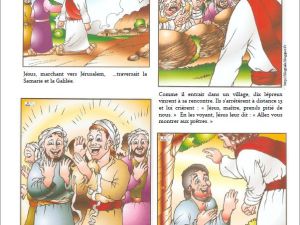
Gratitude to God is a sacred duty that we must never stop because we have all been « cured » and « saved » by Jesus- Christ, our Redeemer. We need to develop our ability to thank because when we thank, this means that we are generous; generosity is measured by the ability to thank. The one who thanks means that he feels loved, and if he feels loved, this means that has been loved and then becomes capable of loving. Do you realize that the Eucharist is called “prayer of thanksgiving”, all is a « thanksgiving » because you know that you are loved. Lire la suite
« It is truly right and just, our duty and our salvation, to give you thanks always and everywhere »
Nothingness is destructive. Emptiness is creative.
“I have nothing…” “The jar…shall not go empty.” Nothingness and emptiness – is there a difference? To speak of nothing brings to mind a sense of desolation and darkness. Emptiness on the other hand, isn’t so desperate; something empty can be filled: my car’s on “E”, but I fill up at the gas station! Although we may describe times of our life interchangeably using nothingness or emptiness, they have different meanings for Christians.
Our first reading recounts the story of Elijah and the widow of Zarephath. The context is this: the Jewish people stopped worshipping the true God to follow false gods, along with the high-ups of society exploiting the poor. So, the Prophet Elijah informs the king that there will be a drought until they repent. And Elijah flees the kingdom to hide. From hiding in pagan territory he meets a woman. We find she’s both a widow and a single mother. (Widows in the ancient world were the poorest of the poor.) It is to this sort of woman that Elijah does what? He asks for water in a drought! He asks for food from a woman scraping by! He wants to take the last bit of food from a starving child! (suite…)
Imâna iracá inzira n’âhó zitarí nyéne. Wāmé uyîzigiye, ibihé vyöse.
Hari umugore yakunda gusenga kandi akizigira Imana cane mu vyo yakora vyose, gusa akagira umugabo w’ikigaba, atumva ko Imana hari ico imaze mu buzima bw’Umuntu, kuburyo yanamurwanya amubuza gusenga ariko kubera ko ugusenga kutabuza uwo mugore gutunganya ivy’urugo, umugabo akabura ikosa amufatirako ngo amwigenzeko amubuze no gusenga. Ni uko rero umugabo aronka amafaranga menshi ayabitsa … Lire la suite